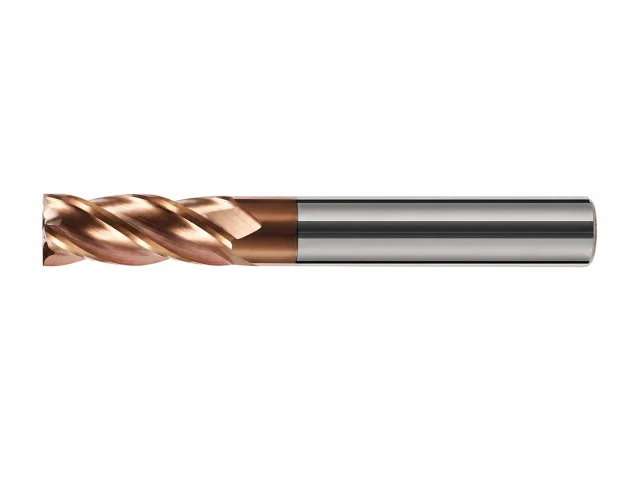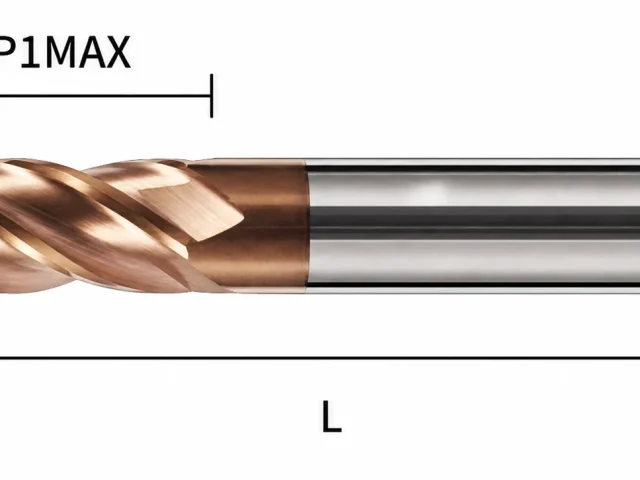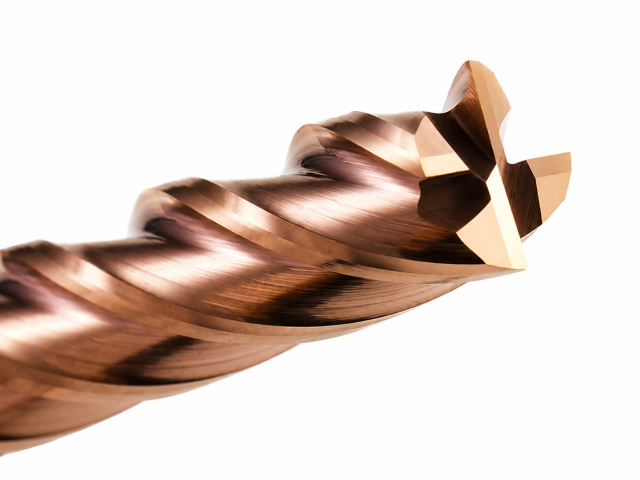
About this tool
A sharp corner is the weakest point of any end mill: it concentrates load onto a few microns of carbide. Adding a radius spreads that load out, and the variable helix keeps the resulting cut stable. Together they are the reason this geometry became the default for hardened steel.
Where it works
Hardened steel, tool steel and high-alloy materials where a sharp corner would chip. Equally at home roughing and finishing.
Cutting data — starting point
Starting values for a rigid setup with a good coolant supply. Treat them as a first trial, then adjust to the machine, the holder and the actual condition of the material.
| Work material | Cutting speed vc | Feed | Depth of cut |
|---|---|---|---|
| Hardened steel 45–55 HRC (H) | 100–160 m/min | 0.015–0.04 mm/tooth | 0.4×D |
| Hardened steel 55–62 HRC (H) | 70–110 m/min | 0.01–0.03 mm/tooth | 0.25×D |
| Alloy steel (P) | 180–260 m/min | 0.02–0.06 mm/tooth | 0.5×D |
What you can specify
- Diameter, corner radius and flute count ground to your drawing
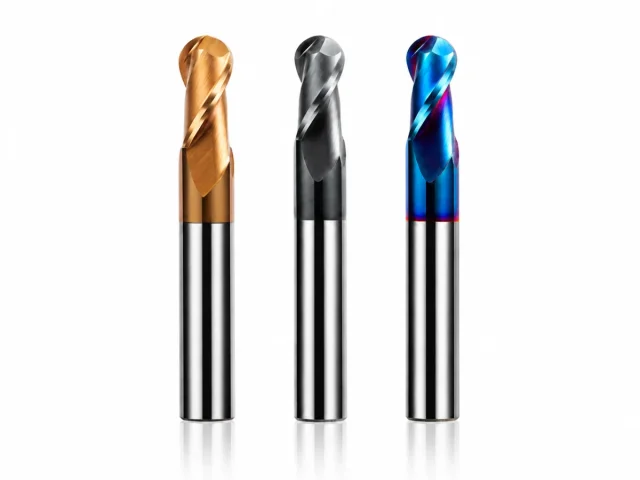
- Coating — AlCrN, AlTiN, TiAlN, DLC or uncoated, matched to the workpiece
- Shank — h6 ground, HA / HB / whistle-notch
- Laser-marked part number, or blank shanks for distributor stock
Not sure about the geometry? Send the drawing or a photo of the part. We recommend the profile, the coating and the starting cutting data — and quote from there.