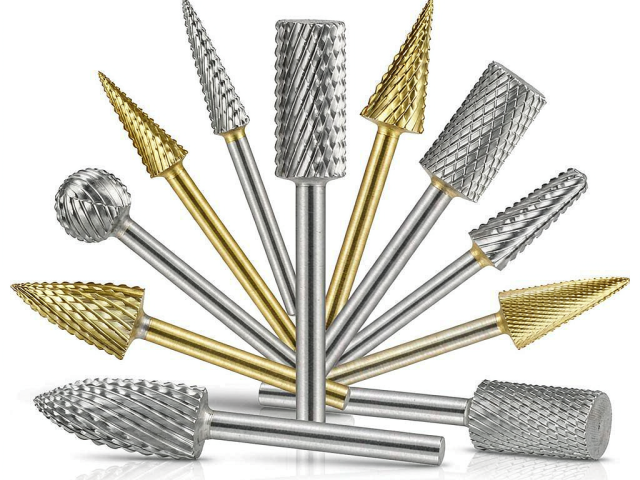
About this tool
Aluminium burrs fail by loading: the chip welds between the teeth and the burr stops cutting. A single wide flute and a polished surface give the chip somewhere to go, which keeps the tool cutting instead of smearing.
Where it works
Aluminium, brass and plastics — shaping, deburring and radiusing, often with a hand-held tool.
Cutting data — starting point
Starting values for a rigid setup with a good coolant supply. Treat them as a first trial, then adjust to the machine, the holder and the actual condition of the material.
| Work material | Cutting speed vc | Feed | Depth of cut |
|---|---|---|---|
| Aluminium (N) | 20,000–30,000 rpm | Hand feed | Light pressure, keep moving |
| Brass / copper (N) | 15,000–25,000 rpm | Hand feed | Light pressure |
| Plastics (N) | 10,000–20,000 rpm | Hand feed | Low speed, avoid heat |
What you can specify
- Diameter, corner radius and flute count ground to your drawing
- Coating — AlCrN, AlTiN, TiAlN, DLC or uncoated, matched to the workpiece
- Shank — h6 ground, HA / HB / whistle-notch
- Laser-marked part number, or blank shanks for distributor stock
Not sure about the geometry? Send the drawing or a photo of the part. We recommend the profile, the coating and the starting cutting data — and quote from there.