About this tool
When a part has a profile, machining it with a standard tool means several passes and a tolerance stack. Grinding the profile into the tool removes the stack and most of the passes, which is usually cheaper once you count the machine time.
Where it works
Production parts with a consistent profile — moldings, extrusions, framing and any shape that repeats.
Cutting data — starting point
Starting values for a rigid setup with a good coolant supply. Treat them as a first trial, then adjust to the machine, the holder and the actual condition of the material.
| Work material | Cutting speed vc | Feed | Depth of cut |
|---|---|---|---|
| Carbon steel (P) | 150–250 m/min | 0.02–0.05 mm/tooth | Per profile |
| Stainless (M) | 80–140 m/min | 0.015–0.035 mm/tooth | Per profile |
| Aluminium (N) | 300–600 m/min | 0.04–0.10 mm/tooth | Per profile |
What you can specify
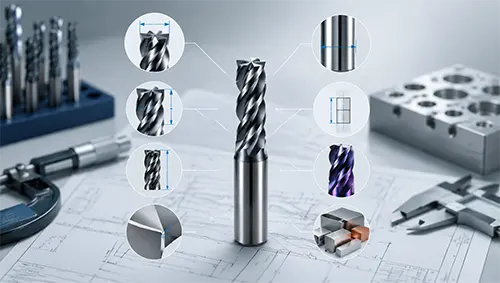
- Diameter, corner radius and flute count ground to your drawing
- Coating — AlCrN, AlTiN, TiAlN, DLC or uncoated, matched to the workpiece
- Shank — h6 ground, HA / HB / whistle-notch
- Laser-marked part number, or blank shanks for distributor stock
Not sure about the geometry? Send the drawing or a photo of the part. We recommend the profile, the coating and the starting cutting data — and quote from there.