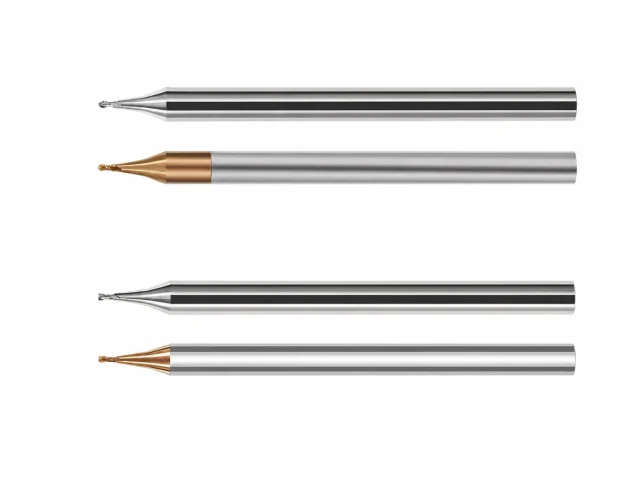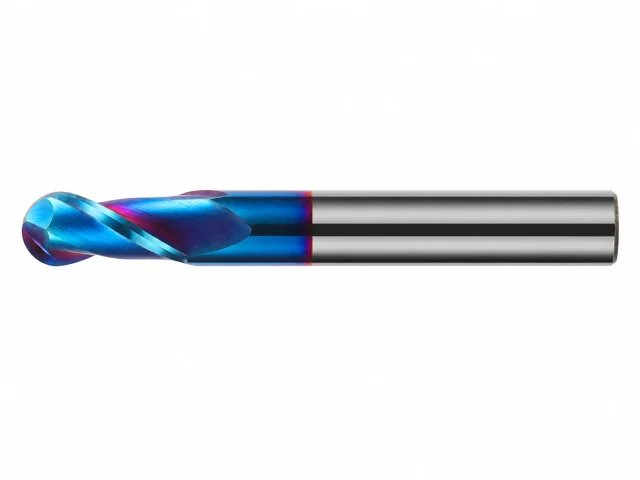

About this tool
A micro edge with a sharp corner chips at the first interruption. Adding even R0.05 mm of radius changes the failure mode, which is why this geometry outsells the square version in rib and slot work.
Where it works
Rib milling, small slots and hard-material micro machining where a sharp corner would fail early.
Cutting data — starting point
Starting values for a rigid setup with a good coolant supply. Treat them as a first trial, then adjust to the machine, the holder and the actual condition of the material.
| Work material | Cutting speed vc | Feed | Depth of cut |
|---|---|---|---|
| Steel (P) | 100–180 m/min | 0.005–0.015 mm/tooth | 0.06×D |
| Hardened steel 45–55 HRC (H) | 70–120 m/min | 0.004–0.012 mm/tooth | 0.04×D |
| Aluminium (N) | 200–400 m/min | 0.010–0.030 mm/tooth | 0.1×D |
What you can specify
- Diameter, corner radius and flute count ground to your drawing
- Coating — AlCrN, AlTiN, TiAlN, DLC or uncoated, matched to the workpiece
- Shank — h6 ground, HA / HB / whistle-notch
- Laser-marked part number, or blank shanks for distributor stock
Not sure about the geometry? Send the drawing or a photo of the part. We recommend the profile, the coating and the starting cutting data — and quote from there.